
University certificate
Accreditation/Membership
.png)







The world's largest faculty of medicine”
Introduction to the Program
Un programa exhaustivo y 100% online, exclusivo de TECH y con una perspectiva internacional respaldada por nuestra afiliación con Pacific Spine and Pain Society”

Según un nuevo informe de la Organización Mundial de la Salud, más de 2 millones de personas sufren enfermedades como la Espondilosis a escala global. En este escenario, la Cirugía de la Columna Cervical ha demostrado ser una herramienta efectiva para mejorar la calidad de vida de los pacientes a largo plazo. Entre sus ventajas, destaca la reducción significativa del Dolor, la restauración de la movilidad y la prevención de progresión neurológica. No obstante, para disfrutar de sus beneficios, los facultativos precisan potenciar sus habilidades clínicas con el objetivo de aplicar técnicas quirúrgicamente invasivas modernas y protocolos actualizados de rehabilitación postoperatoria.
En este marco, TECH ha creado un vanguardista Postgraduate diploma en Cervical Spine Surgery. Concebido por referencias en esta área, el plan de estudios abordará estrategias innovadoras para el diagnóstico preciso y la planificación quirúrgica individualizada. En relación con esto, el temario profundizará en la ejecución de abordajes mínimamente invasivos y abiertos de última generación. También, los materiales didácticos ofrecerán las claves para manejar equipos tecnológicos modernos para monitorear el estado clínico de los usuarios. Así, los egresados obtendrán competencias avanzadas para mejorar el bienestar general de los pacientes.
Por otra parte, esta opción académica se apoya en la disruptiva metodología del Relearning para propiciar una actualización de conocimientos natural y duradera. De este modo, los médicos solamente necesitarán un dispositivo electrónico con conexión a internet para ingresar en el Campus Virtual. Allí tendrán a su alcance múltiples píldoras multimedia como vídeos explicativos, lecturas especializadas o ejercicios prácticos. Como colofón, un prestigioso Director Invitado Internacional ofrecerá unas intensivas Masterclasses.
Gracias a que TECH es miembro de la Pacific Spine and Pain Society (PSPS), sus egresados acceden a materiales clínicos actualizados y sesiones educativas centradas en afecciones de la columna. Esta afiliación les permite participar en simposios y foros especializados, conectando con expertos en dolor y cirugía espinal, y ampliando su red profesional en un campo altamente especializado.
Un reputado Director Invitado Internacional impartirá unas exhaustivas Masterclasses sobre las innovaciones más recientes en la Cirugía de Columna Cervical para fortalecer tus competencias significativamente”
Esta Postgraduate diploma en Cervical Spine Surgery contiene el programa universitario más completo y actualizado del mercado. Sus características más destacadas son:
- El desarrollo de casos prácticos presentados por expertos en Medicina
- Los contenidos gráficos, esquemáticos y eminentemente prácticos con los que están concebidos recogen una información científica y práctica sobre aquellas disciplinas indispensables para el ejercicio profesional
- Los ejercicios prácticos donde realizar el proceso de autoevaluación para mejorar el aprendizaje
- Su especial hincapié en metodologías innovadoras
- Las lecciones teóricas, preguntas al experto, foros de discusión de temas controvertidos y trabajos de reflexión individual
- La disponibilidad de acceso a los contenidos desde cualquier dispositivo fijo o portátil con conexión a internet
Dominarás el uso de técnicas diagnósticas modernas como la resonancia magnética para la identificación temprana de Tumores Primarios de la Columna Cervical”
Incluye en su cuadro docente a profesionales pertenecientes al ámbito de la Medicina, que vierten en este programa la experiencia de su trabajo, además de reconocidos especialistas de sociedades de referencia y universidades de prestigio.
Su contenido multimedia, elaborado con la última tecnología educativa, permitirá al profesional un aprendizaje situado y contextualizado, es decir, un entorno simulado que proporcionará un estudio inmersivo programado para entrenarse ante situaciones reales.
El diseño de este programa se centra en el Aprendizaje Basado en Problemas, mediante el cual el alumno deberá tratar de resolver las distintas situaciones de práctica profesional que se le planteen a lo largo del curso académico. Para ello, el profesional contará con la ayuda de un novedoso sistema de vídeo interactivo realizado por reconocidos expertos.
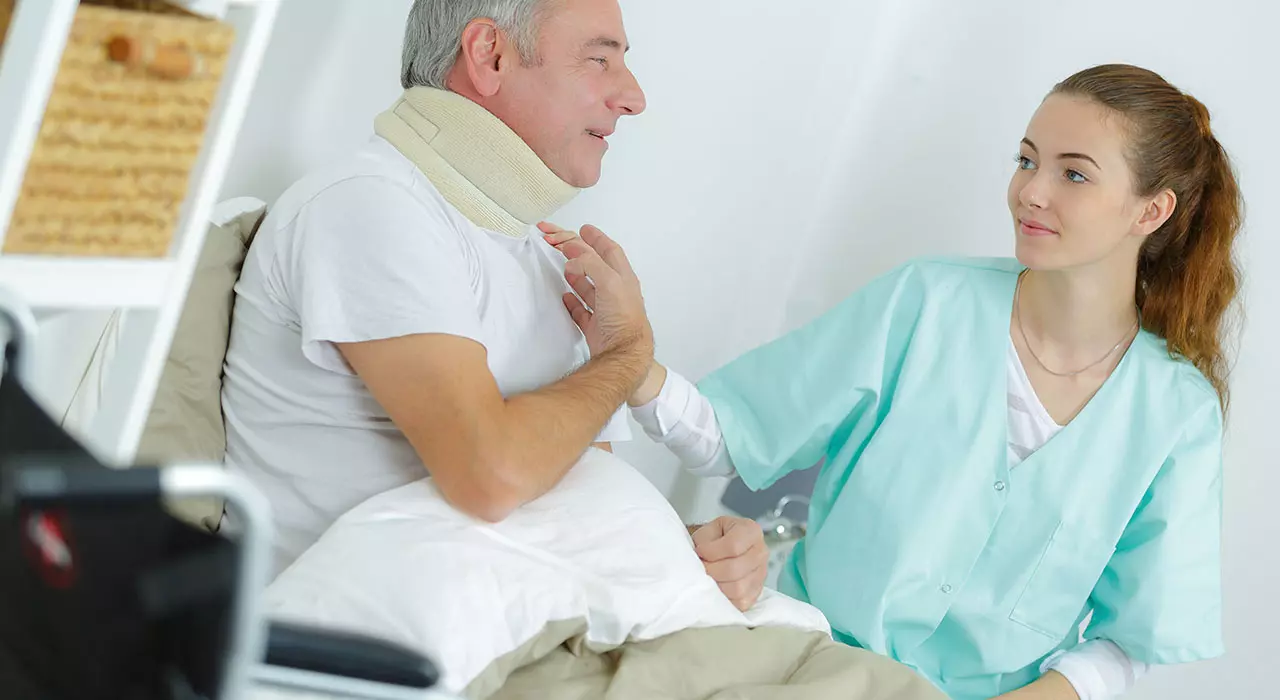
Obtendrás criterios clínicos y quirúrgicos basados en la última evidencia científica para el abordaje holístico de Fracturas Vertebrales Cervicales por caídas"
Mediante la disruptiva metodología del Relearning impulsada por TECH, afianzarás los conceptos esenciales de una forma rápida, natural y precisa"
Syllabus
The structure of the content has been designed by the best professionals in the sector, with extensive experience and recognized prestige in the profession, backed by the volume of cases reviewed, studied, and diagnosed, and with extensive knowledge of new technologies applied to teaching.

This Postgraduate diploma contains the most complete and up-to-date scientific program on the market"
Module 1. Surgical Approaches to the Spine
1.1. Cervical Column Approaches
1.1.1. Cervical Anatomy
1.1.2. Muscles and Anatomical Limits
1.1.3. Neurological Structures and Their Location
1.1.5. Anterior Approaches to the Cervical Spine
1.1.6. C1-C2 Transoral Approach
1.1.7. Lateral Approaches to the Cervical Spine
1.1.8. Which Approach to Perform: Right or Left
1.1.9. Approaches to the Cervico-Thoracic Union
1.1.10. Posterior Approaches to the Cervical Spine
1.1.11. Posterior Approach to the C1-C2 Joints
1.1.12. Posterior Cervical Foraminotomy
1.1.13. Complications of Cervical Spine Surgery
1.1.14. Bleeding
1.1.15. Durable Lesions
1.1.16. Alterations of Pharynx
1.1.17. Esophageal Injuries
1.1.18. Postoperative Management of Cervical Surgery Patients
1.2. Thoracic Column Approaches
1.2.1. General Indications
1.2.2. Absolute and Relative Contraindications
1.2.3. Preoperative Planning
1.2.4. Anterior Approaches to Thoracic Spine
1.2.5. DIV-DXI Transthoracic Approach
1.2.6. Transpleural Anterior Approach DIII-DXI. Louis
1.2.7. Thoracolumbar Junction Approaches
1.2.8. Transpleural-Retroperitoneal Approach
1.2.9. Extrapleural Approaches
1.2.10. Video-endoscopic Approach to the Thoracic Spine.
1.2.11. Posterior and Posterolateral Approaches tothe Thoracic Spine. Thoracic Disc Access
1.2.12. Costotransversectomy
1.2.13. Postoperative Management
1.3. Lumbar Spine Approaches
1.3.1. Anterior Approach
1.3.2. L2-L5 Retroperitoneal Anterior Approaches
1.3.3. Extraperitoneal Anterior Approach with Median Incision for L2-L5 Levels
1.3.4. Anterior Pararectal Approach Retroperitoneal to L5-S1
1.3.5. Laparoscopic Transperitoneal Approach to L5-S1
1.3.6. Lateral Oblique Approach of the Lumbar Spine to L2-L5
1.3.7. En Bloc Sacrectomy
1.4. Lateral Approaches
1.4.1. Lateral Approach for Discectomies, Foraminotomies or XLIF Lateral Fusions
1.4.2. Microscopic or Minimally Invasive Lumbar Discectomy
1.5. Posterior Approach
1.5.1. Posterior Approaches to the Cervical Spine
1.5.2. Lumbar Paraspinous Spinal Cord Approaches
1.5.3. Foraminal Approach to the Lumbar Disc
1.6. Complications of Thoracolumbar and Lumbar Spine Approaches
Module 2. Cervical Spine Pathology
2.1. General Aspects. Cervical Pain Diagnosis
2.1.1. Anatomy and Biomechanics of the Cervical Spine, Applied to the New Surgical Techniques
2.1.2. Biochemical and Cellular Bases of Intervertebral Disc Degeneration
2.1.3. Advances in Diagnostic Imaging of Cervical Spine Diseases
2.1.4. Assessment of Neurological Compromise. Clinical and Neurophysiology
2.1.5. Posterior Access to the Craniovertebral Junction: Importance of Developing a Very Meticulous Technique
2.2. Therapeutic Overview Cervical Pain
2.2.1. Cervical Pain, Radiculopathy and Cervical Myelopathy. Pathophysiology and Natural History
2.2.2. Outcome Measurement Scales in Cervical Pathology
2.2.3. Semi-Invasive Treatment of Cervical Pain and Cervico-Brachialgia
2.2.4. Role of Rehabilitation in the Treatment of Cervical Degenerative Processes Different Protocols
2.3. Cervical Radicular Pain Surgery
2.3.1. Analyze the Causes and Incidence of Radicular Pain in the Cervical Spine
2.3.2. Justify the Different Indications for Surgery
2.3.3. Role of Posterior Approach and Microsurgery in Cervical Radiculopathy
2.3.4. Evidence on Conservative versus Surgical Treatment of Cervical Radiculopathy. Literature Review
2.3.5. Herniated Cervical Disc. Anterior or Posterior Approach
2.3.6. Fusion Techniques or Disc Prosthesis
2.3.7. Identify Factors Influencing the Regression of Cervical Hernia Symptoms
2.3.8. Evaluate the Surgical Options
2.3.9. Anticipate Possible Complications and Find a Return to Work Plan and Activity
2.3.10. Formulate a Plan for When Problems Arise at the Adjacent Level
2.4. Whiplash Syndrome. Whiplash
2.4.1. Pathophysiology, Anatomopathologic Alterations
2.4.2. Initial Assessment of the Patient. Prognostic Factors
2.4.3. Acute Phase Treatment. Treatment in the Sequelae Phase
2.4.4. Socioeconomic Impacts of Whiplash Syndrome
2.5. Cervical Degenerative Pathology
2.5.1. Multilevel Cervical Spondylosis
2.5.2. Anterior Approach
2.5.3. Posterior Approach
2.5.4. Adjacent Segment Degeneration. How To Act
2.5.5. Cervical Spine Deformities
2.6. Cervical Myelopathy
2.6.1. Manifestations, Causes and Natural History of Myelopathy.
2.6.1.1. Compare the Clinical and Functional Presentation of Spondylotic Myelopathic Syndromes
2.6.1.2. Degrees of Disease Using Validated Scales
2.6.1.3. Anticipate Appearance of Clinical Signs and Consider Differential Diagnoses
2.6.1.4. Describe the Natural History of the Disease
2.6.1.5. Identify the Particular Clinical Presentation of Cervico-Cranial Myelopathy
2.6.2. Clinical and Surgical Decision Making in Myelopathy
2.6.2.1. Define a Treatment Plan for Patients with Myelopathy
2.6.2.2. Identify the Absolute and Relative Indications for Surgery in Spondylotic Myelopathy
2.6.2.3. Compare the Different Surgical Approaches in Myelopathy and Define a Rational Treatment Plan
2.6.2.3. Justification of the Anterior Route.
2.6.2.4. Discuss the Role of Intraoperative Neuro-Monitoring in Cervical Myelopathy
2.6.2.5. Cervicalpondylotic Myelopathy. Updating and Therapeutic Guidance
2.6.2.6. Management of Cervical Myelopathy Anterior Route. Multilevel Pathology
2.6.2.7. Use of Corpectomy or Boxes
2.6.2.8. Management of Cervical Myelopathy Posterior Route. Multilevel Pathology
2.6.2.9. Thoracic Scalene Gorge Syndrome
2.7. Cervical Spine Trauma
2.7.1. Imaging in Cervical Trauma
2.7.1.1. Selection of Appropriate Imaging to Detect Cervical Fracture
2.7.1.2. Evaluate Radiological Imaging Options
2.7.1.3. Select Appropriate CT or MRI Images
2.7.1.4. Differentiate Between Major and Minor Trauma of the Upper Cervical Spine
2.7.2. Occipito-Cervical Instability
2.7.2.1. Anatomy and Biomechanics of the Upper Cervical Spine
2.7.2.2. Types of Instabilities
2.7.2.3. Post-traumatic
2.7.2.4. Congenital
2.7.3. Fractures of the Upper C0-C2 Region: Classification and Management
2.7.3.1. Define the Role of Ligaments in the Stability of the Cervical Spine
2.7.3.2. Classify in Relation to Subsequent Treatment
2.7.3.3. Occipital Condyle Fractures
2.7.3.4. Occipito-Cervical Dislocation, Occipito-Atloid Dislocation, or Attalanto-Axoid Instability. Atlas or C1 Fractures
2.7.3.5. Atlas or C2 Fractures
2.7.3.5. Traumatic Spondylolisthesis of C2
2.7.4. Subaxial Cervical Spine Traumas
2.7.4.1. Subaxial Cervical Spine Trauma. Classification and Management
2.7.4.2. Estimate Incidence and Classify using AO Classification
2.7.4.3. Use Other Classifications to Determine Treatment
2.7.4.4. Anticipate Errors in Diagnosis
2.7.4.5. Evaluate Non-Surgical Treatment Options and When They Are Appropriate
2.7.4.6. Recognize the Indications for Surgical Treatment
2.7.4.7. Recognize those Fractures that Require Urgent Treatment
2.7.4.8. Justify the Different Fracture Approaches, Anterior or Posterior Approach or Combined Anterior and Posterior Approaches
2.8. Inflammatory and Infectious Pathology in Cervical Spine
2.8.1. Current Treatment of Cervical Spine Infections
2.8.2. Rheumatoid Arthritis of the Cervical Spine
2.8.3. Cervical Instability in Down Syndrome
2.8.4. Pathology of the Craniocervical Region. Anterior Surgical Treatment
Module 3. Herniated Discs, Diagnosis and Treatment of Radicular Pain. Emerging Technologies for the Treatment of Low Back Pain
3.1. Epidemiology, Natural History and Imaging Findings in Radicular Pain
3.1.1. Use of the Usual Epidemiological Terms to Define and Prevalence Factors of Radicular Pain
3.1.2. Knowledge of the Natural History of Radicular Pain
3.1.3. Identify Contributing Fractures
3.1.4. Diagnosis of the Causes of Radicular Pain
3.1.5. Evaluate Why Disc Herniations Occur
3.1.6. Differentiate the Role of Diagnostic Imaging between Computerized Axial Tomography (CT) and Magnetic Resonance Imaging (MRI) for Radicular Pain
3.1.7. Interpretation of Images Using the Correct Nomenclature
3.2. Non Surgical Action in the Treatment of Radicular Pain
3.2.1. Evaluate Non Surgical Treatment Options for Radicular Pain
3.2.2. Explaining These Options to Patients
3.2.3. Identify Patients who are Susceptible to Non Surgical Treatment
3.2.4. Differentiate Between Types of Analgesia. Analgesic Scale
3.2.5. Summarize the Roles of Rehabilitation and Physiotherapy
3.3. Surgery of Radicular Pain in the Lumbar Spine
3.3.1. Differences Between the Various Absolute and Relative Indications for Surgery
3.3.2. Identify Appropriate Timing for Surgery
3.3.3. Evaluate the Usual Surgical Techniques with Evidence Support
3.3.4. Compare Both Surgical and Non Surgical Treatment Options
3.3.5. Formulate an Adequate Surgical Plan
3.3.6. Anticipate Possible Complications and Establish a Plan for Return to Work and Activity
3.4. Thoracic Myelopathy
3.4.1. Myelopathic Imaging: Techniques and Prognostic Indicators
3.4.2. Interpret MRI and CT Findings in Spondylotic Myelopathy
3.4.3. Recognize the Change of Signs in Different Rmn Sequences and their Significance
3.4.4. Consider the Different Differential Diagnoses in Non Tumorous Pathology of the Spinal Cord
3.4.5. Know the Current Role of Myelography and MyeloTAC in Myelopathy Imaging
3.4.5.1. Clinical and Surgical Decision Making in Thoracic Myelopathy
3.4.5.2. Management of the Risk-Benefit Balance in the Surgery of Patients with Thoracic Myelopathy
3.4.5.3. Compare the Different Approaches to Thoracic Myelopathy
3.5. Axial Low Back Pain
3.5.1. Historia Natural. Obstáculos para la recuperación y Aspectos del tratamiento No quirúrgico del dolor Axial
3.5.1. Natural History. Obstacles to Recovery and Aspects of Non Surgical Treatment of Axial Pain
3.5.1.1. Anticipate Potential Obstacles to Recovery
3.5.1.2. Explain How Mood Can Be Used
3.5.1.3. How to Handle Catastrophic Ideas
3.5.1.4. Differentiate Between Acute and Chronic Low Back Pain
3.5.1.5. Evaluate the Different Options for the Non Surgical Treatment of Low Back Pain
3.5.1.6. Summarize the Current State of the Evidence Regarding Surgical and Non Operative Management
3.5.2. How to Assess a Patient with Axial Pain
3.5.2.1. Understand the Role of Natural History and Physical Examination in the Assessment of these Patients with Axial Pain
3.5.2.2. Decide on the Need for Imaging Studies
3.5.2.3. Select Patients with Axial Pain in Need of Advanced Diagnostic Techniques
3.5.2.4. Revisar el papel de los bloqueos diagnósticos y de la discografía en pacientes con dolor Axial
3.5.2.4. Review the Role of Diagnostic Blocks and Discography in Patients with Axial Pain
3.5.2.5. Conservative Treatment of Low Back Pain
3.5.2.6. Opioid Practice and Perspective: Who is at Risk of Addiction?
3.5.2.7. Radiofrequency Ablation in Low Back Pain
3.5.2.8. Stem Cells and Intradiscal Lumbar Procedures
3.5.2.9. Implantable Therapies for Chronic Low Back Pain
3.5.3. Axial Lumbar Pain Surgery
3.5.3.1. Promote a Rational Alternative to Surgical Fusion
3.5.3.2. Evaluate Alternative Options
3.5.3.3. Select an Appropriate Approach
3.5.3.4. Review Current Evidence.
Module 4. Complications in Spinal Surgery. Miscellaneous
4.1. Neurological Complications in Spinal Surgery
4.1.1. Dura Mater Tears.
4.1.1.1. Conservative Management of Dural Tears.
4.1.1.2. Primary Repair
4.1.1.3. Secondary Actions
4.1.2. Nerve Root Injuries.
4.1.2.1. Direct Injury to Nerves During Surgery
4.1.2.2. Peripheral Neuropathies due to Patient Positioning
4.1.2. Neurological Complications related to Bone Grafts
4.2. Vascular Complications
4.2.1. Vascular Injuries in Spinal Surgery
4.2.2. Anterior Cervical Vascular Injuries
4.2.3. Thoracic Vascular Complications
4.2.3.1. Anterior Approach
4.2.3.2. Posterior Approach
4.2.4. Lumbar Vascular Complications
4.2.4.1. Anterior Approach
4.2.4.2. Posterior Approach
4.2.5. Other Vascular Complications
4.3. Spine Infections
4.3.1. Main Pathogens in Spinal Surgery
4.3.2. Causes of the Infections. Risk Factors
4.3.3. Diagnostic and Imaging Tests
4.3.4. Spondylodiscitis
4.3.5. Post Surgical Infections
4.3.6. Treatment Planning
4.3.6.1. Antibiotic Medical Treatment
4.3.6.2. Treatment of Surgical Wounds Vacuum Systems
4.4. Complications Derived from the Surgical Procedure
4.4.1. Failed Back Syndrome. Classification
4.4.1.1. Reasons for Failure of Surgical Instrumentation
4.4.1.2. Postoperative Vertebral Instability
4.4.1.3. Postoperative Deformities
4.4.1.4. Pseudarthrosis
4.4.2. Adjacent Level Diseases. Therapeutic Approach
0.4.3. Revision Surgery. Strategies
4.5. Evaluation and Treatment of Sacroiliac Pathology
4.6. Navigation and Robotics in Thoracolumbar Spinal Surgery
4.7. Use of Bone Grafts in Spinal Surgery
4.7.1. Autograft and Allograft
4.7.2. Demineralized Bone Matrix and Osteoconductive Ceramics
4.7.3. Biological Substitutes
4.7.4. Grafts in Revision Surgeries
4.7.5. Stem Cells and Cellular Bone Matrix
4.8. Evaluation and Follow-up Tools in Spinal Surgery
4.8.1. Neurological Assessment Scales
4.8.2. SF-36, VAS, Oswestry…

This specialization will allow you to advance in your career comfortably"
Postgraduate Diploma in Cervical Spine Surgery
The Postgraduate Diploma in Cervical Spine Surgery is an academic program focused on the advanced training of medical professionals specialized in cervical surgery. The program is designed to offer a complete preparation in cervical surgery, with emphasis on the most modern and advanced techniques. The Postgraduate Diploma is based on online lectures, allowing students to study from anywhere in the world. Among the topics covered in this academic program are the anatomy of the cervical spine, the most common pathologies, the most advanced and up-to-date surgical techniques, the multidisciplinary approach in the management of cervical spine pathologies, and the efficient management of surgical complications. The Postgraduate Diploma is aimed at medical professionals with experience in spinal or dorsolumbar surgery, such as orthopedists, traumatologists, neurosurgeons, radiologists and anesthesiologists. It is also aimed at specialists in sports medicine, rheumatology, rehabilitation and physiotherapy, who wish to expand their knowledge and skills in the field of cervical spine surgery.
Study without being limited to fixed schedules with TECH
After completing the program, students will be able to apply the most modern and advanced surgical techniques for the treatment of cervical spine pathologies, always taking into account the best practices and multidisciplinary approach in the treatment of these pathologies. At TECH thousands of people learn thanks to our online modality, which allows them to work and take care of their home at the same time they are trained. In summary, the Postgraduate Diploma in Cervical Spine Surgery is a comprehensive, up-to-date and practical academic program designed to train specialists in cervical spine surgery. Students will acquire the skills and knowledge necessary to meet the ever-changing challenges of this specialty in an ever-evolving world.