
University certificate







The world's largest faculty of education”
Introduction to the Program
Conoce los últimos avances en Gamification in the Classroom”

Este programa de Postgraduate diploma en Gamification in the Classroom generará una sensación de seguridad en el desempeño de tu profesión, que te ayudará a crecer personal y profesionalmente”
Este tipo de aprendizaje gana terreno en las metodologías de formación debido a su carácter lúdico, que facilita la interiorización de conocimientos de una forma más divertida, generando una experiencia positiva en el usuario.
El programa de este curso permitirá dominar dos de las tendencias del momento: la gamificación y la transformación digital, tanto para alumnos provenientes del mundo empresarial como del mundo educativo. Entendemos además que la gamificación queda definida como acción y por ello este programa no sólo será realizado por profesionales que han diseñado y puesto en práctica con éxito gamificaciones y ludificaciones en empresas, grupos humanos y alumnos reales, resolviendo problemas actuales en empresas, aulas y colegios reales, sino que se integra a los alumnos en una gamificación, para que estos descubran en primera persona lo que significa aprender en un entorno gamificado. Además, los módulos de recursos digitales les permitirán liderar la transformación educativa en sus centros.
Si pertenece al mundo de la empresa, este programa le será útil para diseñar y aplicar iniciativas gamificadoras en departamentos como recursos humanos, marketing o ventas. Si viene del mundo educativo, le permitirá liderar la innovación educativa, al dominar dos de sus principales puntos: la implantación digital y la gamificación. Aprenderán también a diseñar juegos y gamificaciones susceptibles de ser comercializados. Todos multiplicarán así sus oportunidades de promoción y el desarrollo de su marca personal.
Actualiza tus conocimientos a través del programa de Postgraduate diploma en Gamification in the Classroom”
Esta Postgraduate diploma en Gamification in the Classroom contiene el programa científico más completo y actualizado del mercado. Las características más destacadas del curso son:
- Desarrollo de casos prácticos presentados por expertos. en gamificación. Sus contenidos gráficos, esquemáticos y eminentemente prácticos con los que están concebidos, recogen una información científica y práctica sobre aquellas disciplinas indispensables para el ejercicio profesional.
- Novedades sobre detección e intervención en Gamification in the Classroom.
- Contiene ejercicios prácticos donde realizar el proceso de autoevaluación para mejorar el aprendizaje.
- Con especial hincapié en metodologías innovadoras en Gamification in the Classroom.
- Todo esto se complementará con lecciones teóricas, preguntas al experto, foros de discusión de temas controvertidos y trabajos de reflexión individual.
- Disponibilidad de los contenidos desde cualquier dispositivo fijo o portátil con conexión a internet.
Esta Postgraduate diploma puede ser la mejor inversión que puedes hacer en la selección de un programa de actualización por dos motivos: además de poner al día tus conocimientos en Gamification in the Classroom, obtendrás un título de Postgraduate diploma por la mayor Universidad Digital del mundo, TECH”
Incluye en su cuadro docente profesionales pertenecientes al ámbito de la Gamification in the Classroom que vierten en esta formación la experiencia de su trabajo, además de reconocidos especialistas pertenecientes a sociedades de referencia y universidades de prestigio.
Gracias a su contenido multimedia elaborado con la última tecnología educativa, permitirán al profesional un aprendizaje situado y contextual, es decir, un entorno simulado que proporcionará un aprendizaje inmersivo programado para entrenarse ante situaciones reales.
El diseño de este programa está basado en el aprendizaje basado en problemas, mediante el cual el profesional deberá tratar de resolver las distintas situaciones de práctica profesional que se le planteen a lo largo dla Postgraduate diploma. Para ello, el profesional contará con la ayuda de un novedoso sistema de vídeo interactivo realizado por reconocidos expertos en el campo de la Gamification in the Classroom y con gran experiencia docente.
Aumenta tu seguridad en la toma de decisiones actualizando tus conocimientos a través de esta Postgraduate diploma”
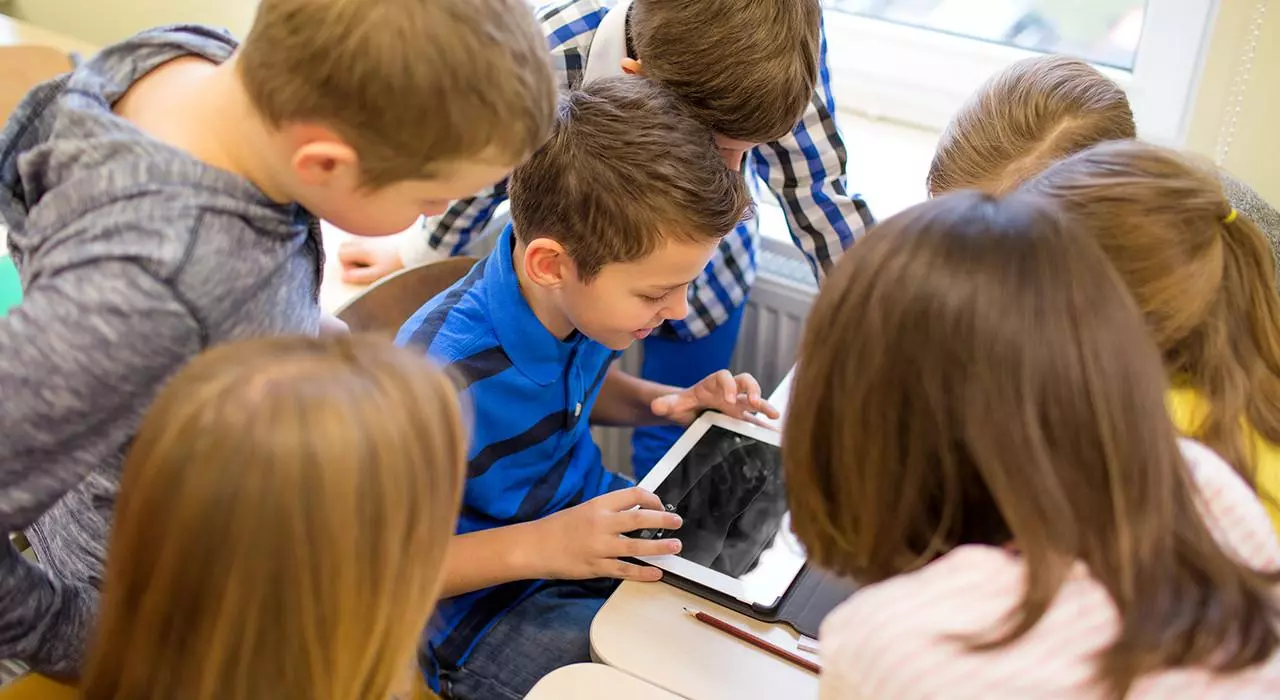
Aprovecha la oportunidad para conocer los últimos avances en Gamification in the Classroom y mejorar la formación de tus alumnos”
Syllabus
The content of this Postgraduate diploma incorporates everything necessary for students to develop solid gamified environments. In this line, they will examine in depth what gamification implies and its narrative possibilities, analyzing its elements and game mechanics. They will also investigate the differences between gamification and gamification, discovering a multitude of games that will ensure the combination of fun and learning in the classroom. Finally, case studies will be presented so that they can experience first-hand the educational benefits of these innovative formats.

A study plan focused on Gamification in the Classroom where you will also play educational video games to see what they will bring to your students"
Module 1. Gamification Fundamentals How to Gamify and Not Die Trying
1.1. Gamifying
1.1.1. What is Gamifying?
1.1.2. What Is It Not?
1.2. The Working Brain: Behavior Models
1.2.1. What do I do? conductivism
1.2.2. Why Behave Like That? Cognitivism
1.2.3. Need Dopamine! Motivation
1.3. Reviewing History
1.3.1. Once Upon a Time... The Game
1.3.2. What’s New Doc? Games Today
1.4. Move, move, move… Dyna ics
1.4.1. Don’t Go There! - Game Restrictions and Limitations
1.4.2. Tell Me a Story: The Narrative
1.4.3. Put Heart into It: Emotions
1.4.4. Getting Older: Player Progress or Evolution
1.4.5. Being Worth It: Status and Recognition
1.4.6. Wow! You Too?: Social Relationships and Interactions
1.5. Can’t Do without Them... Mechanics!
1.5.1. Go for It!: Challenges and Objectives
1.5.2. Superman: Competition
1.5.3. The League of Extraordinary Gentlemen: Cooperation
1.5.4. How Did I Do? Feedback
1.5.5. My treasureeeee: Rewards
1.5.6. My Turn!: Taking Turns
1.6. Three ‘People’, One Destiny: Classifying Players
1.6.1. Richard Bartle’s Theory: Betting at 4
1.6.2. Andrzej Mrczewski’s Theory: Raising to 5
1.6.3. Amy Jo Kim’s Theory: Leaving It at 4
1.7. To What End?
1.7.1. Motivation: You Like Me
1.7.2. Loyalty: Stay with Me
1.7.3. Optimization: If We Did Better
1.8. Advantages of Gamification
Module 2. Game Elements and Mechanics
2.1. Playing with Concepts and Conceptualizing Games: An Introduction
2.1.1. What Are Game Mechanics?
2.1.2. Basic Concepts
2.2. Starting from the Beginning: Basic Mechanics
2.2.1. Game Frameworks
2.2.1.1. Grouping
2.2.1.2. Cooperation and Competition
2.2.2. Time
2.3. Chance and You: Randomization Mechanics
2.3.1. Chance as a Resource
2.3.2. Possibility, Probability and Certainty
2.4. Together, but Not in Each Other’s Pockets: Mechanics and Interaction
2.4.1. Interaction and Non-interaction
2.4.2. The Scope
2.5. Without this There is No Game 1: Player Interaction
2.5.1. Resources
2.5.2. Space Mechanics
2.5.3. Puzzles and Questions
2.6. No Game without This: Narratives and Role-playing Games
2.6.1. Social Mechanics
2.6.2. The Narrative
2.7. From Start to Finish: Reward and Completion Mechanics
2.7.1. Winning Conditions
2.7.2. Comparative Systems
2.7.3. Winning and Losing in Cooperative Games
2.7.4. Combinations
2.8. There Is Something Out There: Rewards beyond the Classroom
2.8.1. Classics
2.8.2. Other Forms of Reward
2.9. On Unforeseen Obstacles and Unexpected Mistakes: Problems and Difficulties
2.9.1. Where the Games Not Fun?
2.9.2. Chance and Controlling It
2.9.3. Snowballs and Wells
2.9.4. What Time Is It?
2.9.5. The Milkmaid’s Tale
2.9.6. Alphas, Betas and Trial Versions
Module 3. Ludification and Game-Based Learning (GBL)
3.1. Do You Know What We're Playing?
3.1.1. Differences between Ludification and Gamification
3.1.2. Ludification and Games
3.1.3. History of Games
3.2. What Do You Want to Play?
3.2.1. By Their Objectives
3.2.1.1. Competitive Games
3.2.1.2. Collaborative Games
3.2.2. Game Elements
3.2.2.1. Board Games
3.2.2.2. Card Games
3.2.2.3. Dice Games
3.2.2.4. Pencil and Paper (Role)
3.3. Our Forefather’s Board Games
3.3.1. First Civilizations, First Games
3.3.1.1. Senet
3.3.1.2. Real Ur Game
3.3.2. Mancala
3.3.3. Chess
3.3.4. Backgammon
3.3.5. Parcheesi
3.3.6. Goose Game
3.4. Who Wants to Be a Millionaire?
3.4.1. The Game of Life
3.4.1.1. The Mansion of Happiness
3.4.1.2. The Checkered Game of Life
3.4.1.3. The Game of Life
3.4.1.4. What Do We Learn from The Game of Life about Values
3.4.2. Monopoly
3.4.2.1. The Landlord’s Game
3.4.2.2. Finance and Others
3.4.2.3. Darrow’s Monopoly
3.4.2.4. Patents, Designs and What to Consider in Ludification
3.4.3. Scrabble
3.5. A Successful Game Has Been Written
3.5.1. Risk
3.5.2. Clue
3.5.3. Trivial Pursuit
3.5.4. Pictionary
3.6. War Games/Wargame and Simulating History
3.6.1. Origin: Avalon Hill
3.6.2. Maturity in Wargames
3.6.3. The CDG Revolution
3.6.4. Latest Trends in Wargames
3.6.5. Wargames Miniatures
3.6.6. Strategy Games in Spain
3.7. Ring, Pencil and Paper Company
3.7.1. The Beginning
3.7.2. The Golden Age and First Controversies
3.7.3. The Narrative Role
3.7.4. Role-playing Games in the 21st Century
3.7.5. Role-Playing Games in Spain
3.8. Once Upon a Time in America, Magic TCGs and Ameritrash
3.8.1. Magic TCGs
3.8.1.1. Magic, The Gathering
3.8.1.2. Other TCGs
3.8.1.3. LCGs
3.8.2. Ameritrash
3.8.2.1. Concept
3.8.2.2. Development
3.8.3. Mixing Hybrid Games
3.9. Beyond Cars and Sausages The Board Game Revolution in Germany
3.9.1. Germany Changes the Rules
3.9.1.1. The German Toy Industry
3.9.1.2. Social Consideration of Games in Germany
3.9.1.3. A Different Type of Game
3.9.2. Eurogames
3.9.2.1. Prehistory
3.9.2.2. The Settlers of Catan (aka Catan or Settlers)
3.9.2.3. Germans Conquering the World
3.9.2.4. The Golden Age of Eurogames
3.9.2.5. Eurogames and Education
3.10. Going Shopping Analysis of the Main Commercial Offer in Spain
3.10.1. Wargames
3.10.2. Role-playing Games
3.10.3. Eurogames
3.10.4. Hybrid
3.10.5. Children’s Games
Module 4. Case Studies
4.1. What’s Up Doc? The Need for Innovation
4.2. Let's Play Flipped Classroom: Innovation Approach and Objectives in the Classroom: Gamification with Flipped Classroom
4.3. How to Design Clio Wars and Not Die Trying Tools Tools Part I Designing Gamifications
4.3.1. Narrative Videos
4.3.2. Monitoring
4.3.3. Rewards
4.4. How to Design Clio Wars and Not Die Trying Tools Tools Part II Designing Gamifications
4.5. Bricolage in Gamification Maintenance, Assessment and Updating in Clio Wars
4.6. Playing with History Part I. Creating Games to Learn in Class: Cour Des Miracles (Court of Miracles)
4.7. Playing with History Part II. Creating Games to Learn in Class Arrow of Time and The War to End All Wars
4.8. Knock, Knock, Knocking on the Escape Room Door. Designing an Escape Room in Class and Implementing It into Gamification
4.9. Upside Down, Inside Out Elaborating Video Lessons
4.10. Video Killed the Radio Star Working with Video Lessons

A unique, key, and decisive educational experience to boost your professional development”
Postgraduate Diploma in Gamification in the Classroom
The effectiveness of traditional teaching methods is decreasing every day due to the unstoppable advance of new technologies. Not showing interest in this innovation race means gradually losing the attention of students in the classroom, so schools must get on this train. In this sense, Gamification is gaining ground in teaching methodologies thanks to its playful nature, facilitating the internalization of knowledge in a more fun way. That is why educators familiar with this technique are needed and TECH offers them the perfect specialization with this degree to design interactive experiences that encourage participation. And all in a 100% online format that is perfectly compatible with the teaching activity. What does gamification consist of? It is a technique that consists of applying the elements of games in any field, in this case, in the classroom. Gamification focuses on learning through games, in which students are involved and their skills and abilities are enhanced. In this way, it makes the teaching process more attractive and motivating, promotes teamwork and collaborative learning, and achieves more satisfactory results.
Learn about Gamification in the Classroom with TECH
Teachers who take the Postgraduate Diploma in Gamification in the Classroom will have the ability to design and implement a gamification plan in their teaching, will know how to integrate the necessary technological tools and will have access to an online tool with which they can put into practice everything they have learned in the classroom. In short, the Postgraduate Diploma in Gamification in the Classroom is the ideal program for those teachers who want to innovate in teaching, who wish to unite technology, games and learning and who seek to motivate their students to achieve better results in their educational practice.