
University certificate







The world's largest faculty of nursing”
Introduction to the Program
Mejora tus conocimientos a través de este programa, donde encontrarás el mejor material didáctico con casos clínicos reales. Conoce aquí los últimos avances en la especialidad para poder realizar una praxis enfermera de calidad”

La enfermería cumple un papel decisivo en la atención del paciente con enfermedad renal crónica, tanto desde su inicio como en estados posteriores. Además de la destreza en las técnicas de sustitución renal como la adquisición de las competencias profesionales específicas, se requiere un cuidado específico y de calidad en los distintos estudios de la enfermedad renal.
Los cuidados del paciente nefrológico, incluyendo las técnicas de sustitución de la función renal, han tenido en los últimos años avances significativos tanto en lo relativo al trasplante renal como a la asistencia sanitaria del enfermo nefrológico, exigiendo a la enfermería una capacitación especializada y continuada. Este programa tan especializado rara vez se encuentra en la capacitación curricular habitual, por lo que muchas enfermeras/os desconocen aspectos importantes de la asistencia a estos pacientes. Una capacitación en este sentido se hace necesaria para garantizar unos mínimos en la calidad de la asistencia.
Aumenta tus competencias en el abordaje de la Hemodialysis for Nursing a través de este programa”
Este Postgraduate certificate en Hemodialysis for Nursing contiene el programa universitario más completo y actualizado del mercado. Sus características más destacadas son:
- Desarrollo de casos clínicos presentados por expertos en enfermería nefrológica
- Sus contenidos gráficos, esquemáticos y eminentemente prácticos con los que están concebidos, recogen una información científica y asistencial sobre aquellas disciplinas médicas indispensables para el ejercicio profesional
- Novedades diagnóstico-terapéuticas sobre la actuación en Hemodiálisis para Enfermería
- Sistema interactivo de aprendizaje basado en algoritmos para la toma de decisiones sobre las situaciones clínicas planteadas
- Con un especial hincapié en la medicina basada en pruebas y las metodologías de la investigación en enfermería en el paciente renal
- Todo esto se complementará con lecciones teóricas, preguntas al experto, foros de discusión de temas controvertidos y trabajos de reflexión individual
- Disponibilidad de los contenidos desde cualquier dispositivo fijo o portátil con conexión a internet
Este Postgraduate certificate es la mejor inversión que puedes hacer en la selección de un programa de actualización por dos motivos: además de poner al día tus conocimientos en Hemodialysis for Nursing, obtendrás un título por TECH Global University”
Incluye en su cuadro docente profesionales de la salud pertenecientes al ámbito de enfermería nefrológica, que vierten en esta capacitación la experiencia de su trabajo, además de reconocidos especialistas pertenecientes a sociedades científicas de referencia.
Gracias a su contenido multimedia elaborado con la última tecnología educativa, permitirán al profesional un aprendizaje situado y contextual, es decir, un entorno simulado que proporcionará un aprendizaje inmersivo programado para entrenarse ante situaciones reales.
El diseño de este programa se centra en el Aprendizaje Basado en Problemas, mediante el cual el médico deberá tratar de resolver las distintas situaciones de práctica profesional que se le planteen a lo largo del programa. Para ello, contará con la ayuda de un novedoso sistema de vídeo interactivo realizado por reconocidos expertos en el campo de enfermería nefrológica y con gran experiencia docente.
El Postgraduate certificate incluye casos clínicos reales y ejercicios para acercar el desarrollo del programa a la práctica de la enfermera que brinda cuidados a enfermos renales"

Aprovecha la oportunidad para actualizar tus conocimientos en hemodiálisis y mejorar la atención a tus pacientes"
Syllabus
The structure of the contents has been designed by a team of professionals knowledgeable about the implications of training in daily nursing practice in hemodialysis, aware of the relevance of the current importance of training to be able to act before the patient with renal pathology and committed to quality teaching through new educational technologies.

This Postgraduate Certificate in Hemodialysis for Nursing, contains the most complete and up-to-date scientific program on the market”
Module 1. Pediatric
1.1. History and Current Status
1.2. Evolution
Module 2. The Physiology of Hemodialysis
2.1. Diffusion
2.2. UF
2.3. Convection
2.4. Convention
2.5. Urea Kinetics
Module 3. Dialysis Liquids
3.1. Introduction
3.2. Water Treatment
3.3. Methods of Water Treatment
3.4. Quality Control of Water
3.5. The Water Treatment Plant, Types and Characteristics, Controls, Problems
Module 4. Dialyzers
4.1. Definition, Characteristics, Formats
4.2. Types of Membranes
4.3. Factors to Consider when Choosing a Dialyzer. Ideal Dialyzer
Module 5. Indications of Hemodialysis
5.1. Dialysis Dosis: Purification of Small, Medium and Large Molecules
5.2. Preservation of Residual Renal Function
Module 6. Dialysis Monitors
6.1. Main Characteristics and Differences Between Different Types
6.2. Preparation and Verification of the Material Needed
6.3. Session Planning According to the Prescription: Composition and Temperature of Dialysis Liquids (DL)
6.3.1. Sterility Conditions
6.3.2. Adjustment of Connections of the Extracorporeal Circuit
6.3.3. Ending the Session
6.3.4. Monitor Management: Setting up, Priming, Connecting, Disconnecting and Disinfecting the Monitors
Module 7. Quality / Efficacy of the Depuration Techniques
7.1. Dialysis Dose KT or KT/V in Each Technique
7.2. Water Balance
7.2.1. Dry Weight
7.2.2. Euvolemic Weight
7.2.3. Bioimpedance Applications
Module 8. High-Flow Hemodialysis
8.1. Definition
8.2. Types
8.3. Equipment Management.
8.4. Benefits of High-Flow Hemodialysis: Biocompatibility
Module 9. Anticoagulation in HD: Update
9.1. The Clot. Coagulation Cascade
9.2. Factors which Promote Clotting in HD
9.3. Use of Anticoagulation in HD
9.3.1. Measurement and Monitoring of Anticoagulation
9.4. Anticoagulation with Heparin
9.4.1. Unfractionated Heparin (UFH)
9.4.2. Types of Heparinization
9.4.3. Low Molecular Weight Heparin (LMWH)
9.4.4. Secondary Effects of Heparin
9.4.5. UFH or LMWH?
9.5. Influence of the Membrane and the HD Technique on Anticoagulation
9.6. Strategies for Patients with High Risk of Bleeding
9.6.1. HD without Heparin
9.6.2. HD Low Dose of Heparin
9.6.3. Regional Heparinization with Citrate
9.6.4. Heparinization with Heparin and Protamine
9.6.5. Citrate in the Dialysis Fluid
9.6.6. Regional Anticoagulation with Prostacyclin
9.6.7. Mesilato Nafomast
9.7. Other Methods of Clotting
9.8. Antiaggregation and Anticoagulation in HD Patients
Module 10. Organization of a Dialysis Unit
10.1. General Objective
10.2. Structure of the Unit
10.3. Dialysis Room
10.4. Organization
10.5. Patients
10.6. Nursing Staff
10.7. Procedures
10.7.1. Preventative Medicine Controls
10.7.2. Patient Documentation
10.7.3. Analytical Controls
10.7.4. Nursing Protocol for the Welcoming Patients with CKD
10.7.5. Welcome Guide for Nursing Professionals in HD
10.7.6. Latest Protocols Needed During the HD Session
Module 11. Latest Information on Vascular Accesses fro HD
11.1. Fistulas
11.1.1. Native and Prosthetic Arteriovenous Fistulas. Most Common Locations
11.1.2. Pre-Surgery Assessment
11.1.3. Surgical Technique
11.1.4. Nursing Care. Postoperative Controls
11.1.5. Nursing Care to Improve Fistula Development and Survival (FAVI)
11.1.6. Home Self-Care of Arteriovenous Fistula
11.1.7. Home Care of an Extravasation of the Arteriovenous Fistula
11.1.8. Measures to Follow in Case of Hemorrhage
11.1.9. Puncture of the AVF. General Rules for Punctures
11.1.10. Pain in Punctures. Puncture Techniques. Special Considerations in the Puncture of Prosthetic AVF
11.1.11. Puncture techniques: Unipuncture or Bipuncture. Butonhole Technique
11.1.12. Self-Guided Vascular Cannulation (Peripheral and Central)
11.1.13. Contol of Blood Recirculation in an Arteriovenous Fistula
11.1.14. Complications and Treatment
11.2. Catheters
11.2.1. Types
11.2.2. Surgical Technique
11.2.3. Catheter Infections
11.2.4. Treatment
11.2.5. Catheter Care and Complications
Module 12. General Care Procedures During the HD Session
12.1. Monitoring of the Patient During the Sessions
12.1.1. Medication in the Hemodialysis Session
12.1.2. Nursing Records and Charts
12.1.3. Nurse’s Actions in the Face of Acute Complications in Hemodialysis Sessions
12.2. Physical Complications
12.2.1. Hypotension
12.2.2. Blood Loss
12.2.3. Cramps
12.2.4. Air Embolism
12.2.5. Hypotension. Causes. Evaluation Methods. Short and Long-Term Treatment. Dry Weight and Ideal Weight
12.2.6. Hypertension
12.2.7. Nausea and Vomiting
12.2.8. Blood Loss
12.2.9. Cramps
12.2.10. Air Embolism
12.2.11. Allergic Reaction to Drugs and Dialysis Material
12.2.12. Haemolysis
12.2.13. Precordial Pain
12.2.14. Seizures
12.2.15. Headaches: Most Common Causes and Treatment
12.3. Mechanisms
12.3.1. Filter Breakage
12.3.2. Partial and/or Total Coagulation of the Circuit
12.3.3. Blood Extravasation
12.3.4. Needle Removal
12.3.5. Monitor Malfunction
12.4. Chronic Complications of HD
12.4.1. Phosphocalcium Metabolism
12.4.2. Sexual and Reproductive Disfunction
12.4.3. Left Ventricular Hypertrophy
12.4.4. Uremic Pericarditis
12.4.5. Uremic Polyneuropathy
12.4.6. Anemia in Hemodialysis
Module 13. Health Education for the Chronic Renal Patient
13.1. Promotion of Healthy Lifestyle Habits
13.2. Appropriate Nutrition
13.3. Fluids and Ions Managament
13.4. Quality of Life for Dialysis Patients
Module 14. Home-based Hemodialysis
14.1. Definition
14.2. Monitor Management
14.3. Training the Patient for Homebased Hemodialysis
Module 15. Managing the Infectious Pathology in Hemodialysis
15.1. Hepatitis C Virus
15.1.1. Latest Information on the Treatment of Hepatitis in Patients with CKD
15.1.2. Hepatitis B Virus
15.1.3. Human Immunodeficiency Virus (HIV)
A unique, key and decisive training experience to boost your professional development”
Postgraduate Certificate in Hemodialysis for Nursing
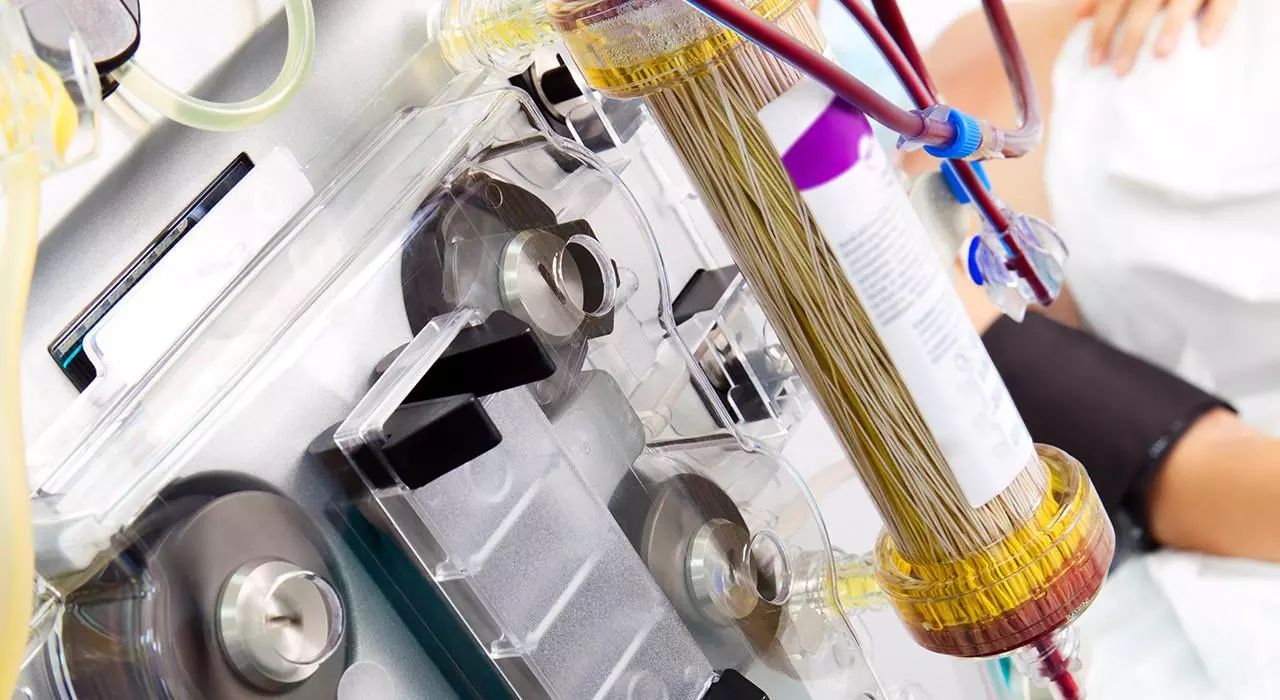
Chronic kidney disease causes the kidneys to not function properly, which makes it necessary to use procedures such as hemodialysis (HD); a fundamental technique that helps the body to filter toxins and water from the blood. This treatment is only carried out by qualified health personnel, however, the developments that have arisen in the sector have caused professionals to continuously train to learn the latest tools used in said procedure. Against this background, TECH Global University developed a Postgraduate Certificate in Hemodialysis for Nursing that covers the main differential characteristics and techniques currently used (high-flow and home hemodialysis). Through this 200-hour online program, students will specialize in optimizing the quality and care of nephrology patients, in order to provide them with a satisfactory recovery and comprehensive well-being. In addition, they will have unique academic material that includes everything from fundamental approach techniques to the ideal care that a user should receive in regular clinical practice.
He is studying a postgraduate Postgraduate Certificate on the hemodialysis procedure
According to the EPIRCE study (Epidemiology of Chronic Renal Failure in Spain), it is estimated that approximately 10% of the adult population suffers from some degree of chronic kidney disease, which requires that the nursing staff develop the necessary skills to treat this pathology through hemodialysis. In this program offered by the largest digital university in the world, students will find the most up-to-date academic agenda in the industry. Due to this, they will be specialists in managing renal function replacement techniques, both in cases of a traditional nature, and in patients with transplants who require individualized healthcare. In the same way, each one will understand the types of dialyzers and their liquids supplied in ideal doses (Kt, Kt/V and clearance of molecules); followed by surgical techniques and proper handling of the monitors (assembly, priming, connection, disconnection and disinfection). After completing the Postgraduate Certificate, students will obtain the necessary skills to deal with any diagnostic-therapeutic novelty that arises during the development of the procedure.