Introduction to the Program

Thanks to this Hybrid Master's Degree, you will master the most modern tools in Aviation Engineering to design highly safe and efficient aeronautical systems”
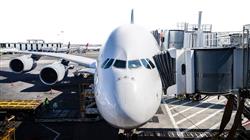
According to a recent report from the International Air Transport Association, this sector is responsible for approximately 12% of global CO2 emissions. In this context, the need to reduce carbon emissions and improve energy efficiency has positioned sustainability as the core focus of Aviation Engineering. As a result, experts have the responsibility to handle the most modern strategies aimed at designing lighter aircraft, using biofuels, and incorporating hybrid propulsion systems. In doing so, they will actively contribute to the transition towards a cleaner, more efficient model aligned with global decarbonization goals for transport.

To address this, TECH has created an innovative Hybrid Master’s Degree in Aviation Engineering. Designed by leading experts in the field, the academic itinerary will dive into topics ranging from the fundamentals of sustainable development and the basics of aviation law to the use of navigation systems. At the same time, the syllabus will focus on the use of cutting-edge technological tools such as artificial intelligence, automated border control stations, and zero-emission handling vehicles. In line with this, the educational materials will offer various strategies to optimize operational safety and air traffic management. Thanks to this, students will gain advanced skills to design and implement innovative solutions that increase the efficiency of aeronautical operations.

Moreover, the first stage of the program is based on a flexible 100% online format. This way, students will have the freedom to set their own schedules and pace of study. Additionally, TECH uses its disruptive Relearning methodology to ensure progressive, natural, and long-lasting learning. Furthermore, graduates will have the opportunity to undertake a 3-week practical internship at a prestigious institution highly specialized in the Aviation Engineering sector.

You will lead innovation projects in areas such as airport infrastructure, urban mobility, and the integration of unmanned aircraft systems”

This Hybrid Master's Degree in Aviation Engineering contains the most complete and up-to-date university program on the market. Its most notable features are:

  • Development of over 100 practical cases presented by professionals in Aviation Engineering
  • Its graphic, schematic and practical contents provide essential information on those disciplines that are indispensable for professional practice
  • All of this will be complemented by theoretical lessons, questions to the expert, debate forums on controversial topics, and individual reflection assignments
  • Content that is accessible from any fixed or portable device with an internet connection
  • Furthermore, you will be able to carry out an internship in one of the best companies

You will enjoy an Internship Program at a renowned entity focused on air transport and logistics operations management”

This Hybrid Master's Degree, with a professionalizing approach and hybrid format, is designed for the continuous development of professionals in Aviation Engineering. The content is based on the latest scientific evidence and is presented in a didactic manner to integrate theoretical knowledge into daily engineering practice. The theoretical and practical elements will facilitate knowledge updating and allow for strategic decision making.

Thanks to its multimedia content developed with the latest educational technology, the program will provide Aviation Engineering professionals with a situated and contextual learning environment, meaning a simulated setting that will offer immersive learning, preparing them for real-life situations. The design of this program is based on Problem-Based Learning, by means of which the student must try to solve the different professional practice situations that arise during the program. For this purpose, students will be assisted by an innovative interactive video system created by renowned experts.

You will delve into the technical and operational principles that govern the management of aeronautical systems"

You will foster critical analysis and strategic decision-making in technological initiatives related to Aviation"

Syllabus

The educational materials that make up this university program have been developed by a group of experts with extensive experience in the aeronautical sector. As a result, the syllabus will explore key aspects ranging from the comprehensive sustainability of air transport to aircraft maintenance. Additionally, the syllabus will offer a variety of cutting-edge strategies to optimize operational safety of structures through modern air navigation systems. The educational materials will also dive into the handling of emerging technologies such as hybrid propulsion, anti-intrusion devices, and even applied artificial intelligence.

master ingenieria aeronautica TECH Global University

You will delve into the management of air navigation and propulsion systems, enabling you to significantly optimize air traffic safety”

Module 1. Comprehensive Sustainability in Aviation

1.1. The Cross-Border Nature of Aviation Development

1.1.1. Development and Evolution of Civil Aviation
1.1.2. ICAO: Regulatory Actor in Internationalization
1.1.3. IATA: Coordination Actor for Airlines

1.2. Flag Carriers and Air Transport Agreements Between Countries

1.2.1. From General Aviation to National Strategic Operators
1.2.2. International Agreements for Commercial Air Transport
1.2.3. Air Freedoms

1.3. 20th Century: Domestic Aircraft, Western or Eastern

1.3.1. From National Manufacturers to Duopolies and State Giants
1.3.2. The Fastest or the Largest
1.3.3. New Management Models: Manufacturer, Maintainer, and Financier

1.4. Airline Alliances, Eurocontrol, Airbus, and International Airport Concessions

1.4.1. Airlines: From Route Sharing to Competition and/or Integration
1.4.2. Airline Alliances in Europe Favored by Supranational Integration
1.4.3. From National Airport Networks to Groups with International Concessions

1.5. Physical Globalization: Navigating the Sea and the Network

1.5.1. The Adventure of Navigating the Earth in Both Directions
1.5.2. Magellan and Elcano
1.5.3. The Global Village

1.6. From Green to Comprehensive Sustainable Development

1.6.1. Ecologism
1.6.2. Comprehensive Sustainable Development
1.6.3. SDGs and Agenda 2030

1.7. Global and Sustainable Aviation in a Comprehensive Manner

1.7.1. Multinational and Global Aviation Bodies
1.7.2. Positive and Negative Impacts of Aviation
1.7.3. Airports as Hubs for All Aviation Stakeholders

1.8. Economic-Technical Sustainability of Aviation

1.8.1. Everyone is “Low Cost,” Some Are “Low Price”
1.8.2. Economic and Social Revenue for “Public” Entities
1.8.3. ICAO (International Civil Aviation Organization). Generator of Global Technical Standards

1.9. Social Sustainability of Aviation

1.9.1. Generators of Connectivity, Wealth, and Employment
1.9.2. Access for Tourism and Emergency Assistance
1.9.3. Publicizing Positive Impacts Unknown to Society

1.10. Environmental Sustainability of Aviation

1.10.1. Efficiency in Consumption and Reduction of Acoustic and Gas Emissions
1.10.2. Suppression, Mitigation, and Compensation of Negative Impacts
1.10.3. Aviation’s Commitment to Reducing the Carbon Footprint

Module 2. Aviation Law: Regulation, Stakeholders, and Control Systems

2.1. International Aviation Regulation

2.1.1. International Aviation Law Regulation. Description and General Characteristics
2.1.2. ICAO as a Source of Aviation Law: Types of Sources and Their Value: International Conventions, Technical Instructions, and Recommendations
2.1.3. Content of the ICAO Normative Framework: Description of the International Framework, Airspace Structure, Service Management, Aircrew, Environment, and Safety

2.2. European Development of Aviation Law

2.2.1. European Aviation Regulatory Framework.  Development Process: Liberalization of Services, Market Competition, and the Single European Sky (1987)
2.2.2. Main Directives and Their Content: Market Access, Airlines, Ground Handling, Slot Allocation, and Airport Charges
2.2.3. The Current “European Aviation Strategy” (2017)

2.3. European Regulation of Airport Economic Management: Directive 2009/12/EC

2.3.1. European Price Directive: Content, Development, and Revision
2.3.2. Actors’ Positions in the System Concerning a Possible Review of the Directive
2.3.3. Air Traffic Systems Fees

2.4. Fundamentals and Topics of National Aviation Law Regulations

2.4.1. Aviation as the Basis for State Sovereignty
2.4.2. Aeronautical Development in States
2.4.3. Control of Aviation Safety

2.5. Different Stakeholders in the Air Transport Services Market. Management Model

2.5.1. Subjects of the Air Transport System: Institutional Actors and Mercantile Companies Influencing Actions: Coexistence of Regimes and Methods of Action
2.5.2. General and Sector Regulations, Impact of Competition Law, and Private Law in a Public Sector-Oriented Industry
2.5.3. Features of the European Airport Management Model. Management of Airport Networks. Other Aeronautical Services and Their Managers

2.6. Concession as a General Framework for Airport Management

2.6.1. Foundation of the Entry of Non-Institutional Managers: Concession Contracts, Agreements, or Management Mandates
2.6.2. Detailed Analysis of Airport Concessions: Topics, Forms, and Obligations of the Parties
2.6.3. Management Through Program Contracts: Content and Limits

2.7. Economic Activities at Airports: Revenue and Management Indicators

2.7.1. Economic Activities at Airports: System Self-Sufficiency
2.7.2. Aeronautical and Commercial Revenues. Economic Regime
2.7.3. Efficiency as a Measure of Management. Management Indicators

2.8. Control Systems and Supervision Areas

2.8.1. Forms of Control Surpassing the Interventionist System. Operation and Investment Control. Security Controls. Economic Control Through Program Contracts
2.8.2. Control Through Independent Agencies: The European ISA System.  Its Relationship with Competition Supervision Mechanisms. A European Example
2.8.3. Alternatives to Intervention: Self-Regulation Through Bilateral Airport Service Contracts

2.9. Airlines and System Resources

2.9.1. Economic Resources of the System and How They Are Managed. The Role of Airlines as Controllers
2.9.2. Positions and Debates IATA-ACI (2016) on Airport Competition
2.9.3. Planning, Development, and Investment Financing Processes

2.10. Current Situation and Challenges in Airport Economic Management

2.10.1. Reconsideration of the Regulated Economic System in European Airports
2.10.2. Current Situation of the Airport Services Market
2.10.3. Current Challenges in Post-Pandemic Airport Management

Module 3. Air Transport: Economy and Management in the Global Market

3.1. Framework of Transport Economics, Principles, Efficiency, and Productivity

3.1.1. Transport as a Large System.  Evolution and Typologies
3.1.2. Principles in Transport Economics
3.1.3. Intermodal Transport: Weaknesses, Strengths, Time Value

3.2. Institutional and Regulatory Environment

3.2.1. Structure of International Air Transport, Global Characteristics of the Private Environment
3.2.2. International Agreements

3.2.2.1. Multilateral and Bilateral Agreements
3.2.2.2. Traffic Rights, Responsibilities

3.2.3. Unique Features of Commercial Aviation

3.3. Air Transport Company

3.3.1. Company Concepts, the Value Chain in Air Transport
3.3.2. Types of Airlines

3.3.2.1. Regional Airlines, Network, Charter, Operators, and Integrators

3.3.3. Air Cargo, Operational Modalities

3.4. Management of Costs, Revenues, and Results in a Transport Company

3.4.1. Description, Measurement, and Allocation of Costs for Producers and Users
3.4.2. Revenues

3.4.2.1. Price Setting and Tariffs
3.4.2.2. Management Results

3.4.3. Value Chain of the Industry and Geographical Impact

3.5. Air Transport: The Market

3.5.1. Demand and Supply
3.5.2. Market Structure
3.5.3. Air Transport Magnitudes and Its Impact on Society

3.6. Management of Infrastructure

3.6.1. Investment in Infrastructure.  Investing in Capacity
3.6.2. Economic Factors in Investment Evaluation
3.6.3. Risk and Cost-Benefit Analysis. Decision Making

3.7. Implications and Consequences of Air Transport

3.7.1. Effects on Global Development: Global Economy vs. Regional Economy
3.7.2. Scope of the Air Transport “Footprint,” Consequences on Other Sectors
3.7.3. Congestion and Safety in Air Transport

3.8. Elements Integrating the Transport System, Necessary Cooperation

3.8.1. Logistics Operators
3.8.2. International Air Safety Agencies

3.8.2.1. Commercial Air Transport Operations

3.8.3. Integration of Elements

3.8.3.1. Airlines, Administrators, Air Navigation Service Providers

3.9. Trends and Perspectives

3.9.1. Air Transport in the 21st Century. Liberalizing Trends
3.9.2. Evolution of Low-Cost and Alliances
3.9.3. Future Analysis: Short and Medium-Term Forecasts

3.10. Configuration of the Global Market

3.10.1. International Air Navigation Service Providers: Eurocontrol, COCESNA, Canso
3.10.2. Agents in the Global Market: ICAO, OMA, UPU, UNDOC, IATA, ACI, Large Operators
3.10.3. Cargo Aircraft vs. Belly Freight

Module 4. Airport Protection and Its Environment: Integration of Evolving Models

4.1. The Airport System. Global Conception

4.1.1. Evolution of the Airport System Concept
4.1.2. Classification of Aerodromes Based on Their Environment
4.1.3. Feasibility of Adaptation to the Environment

4.2. Airport Design. Physical Factors Affecting the Design

4.2.1. Orography and Geology
4.2.2. Climatic Factors
4.2.3. Environmental factors

4.3. Regulatory Framework

4.3.1. Main Regulatory Bodies
4.3.2. Environmental Regulation
4.3.3. Regulation on Easements

4.4. Protection of Airport Operations

4.4.1. Radioelectrical Easements
4.4.2. Aerodrome Easements
4.4.3. Operational Easements
4.4.4. Obstacle-Free Zones

4.5. Protection of the Airport System’s Environment

4.5.1. Environmental Protection
4.5.2. Noise Protection. Noise Maps and Acoustic Easements
4.5.3. Marine Airport Environments
4.5.4. Environmental Strategic Declarations/Documents

4.6. Characterization of Risks to Sustainable and Coordinated Development

4.6.1. Operational Risks
4.6.2. Environmental Risks
4.6.3. Economic Risks

4.7. Monitoring of Easements

4.7.1. Involved Agents and Their Functions
4.7.2. Monitoring Mechanisms
4.7.3. Activity Restrictions
4.7.4. Coordination Mechanisms

4.8. Intermodal Coordination

4.8.1. Evolution of Intermodality
4.8.2. Modal Spaces
4.8.3. Coordination with Ground Transportation

4.9. Socioeconomic Impact

4.9.1. Characterization of the Global Impact of Aviation on Society
4.9.2. The Role of International Associations in Global Development
4.9.3. Local Impact. Coordination Committees Between Airports and Surrounding Areas

4.10. Future Challenges in Airport Development

4.10.1. Operational Limitations and Traffic Growth
4.10.2. The Present and Rise of UAVs and Easement Monitoring
4.10.3. Risks of Urban and Aeronautical Innovations
4.10.4. Adaptation of the Regulatory Framework

Module 5. Security, Security Against Unlawful Acts in Civil Aviation, AVSEC

5.1. Security

5.1.1. Definition of Security (Security) according to Annex 17 of ICAO
5.1.2. History of Security
5.1.3. Evolution of Security Attacks/Measures

5.2. Regulations

5.2.1. Security Regulations
5.2.2. International Civil Aviation and EU Regulations
5.2.3. One-Stop Security and Other Agreements Between Countries

5.3. Facilitation vs. Security

5.3.1. Analysis of the Balance Between Security and Facilitation for the Proper Operation of Airport Operations
5.3.2. Existing Regulations
5.3.3. Necessary Equipment

5.4.  Material Resources. Equipment

5.4.1. Available Equipment
5.4.2. Certification, Homologation
5.4.3. New Technologies

5.5. Material Resources. Facilities

5.5.1. Integrated Security Systems
5.5.2. Physical Means
5.5.3. Electronic Security Means

5.6. Infrastructure Planning

5.6.1. The Influence of Security on Airport Desig
5.6.2. Materials
5.6.3. Passenger Flows
5.6.4. Adequate Facilities for Security Systems

5.7. Human Resources

5.7.1. Training
5.7.2. Roles and Responsibilities
5.7.3. Management of Private Security Services

5.8. Security in Airlines

5.8.1. Aircraft
5.8.2. Facilities
5.8.3. Reference Regulations
5.8.4. Special Measures

5.9. Security in Air Cargo

5.9.1. Cargo
5.9.2. Mail
5.9.3. Onboard Supplies
5.9.4. Airport Supplies

5.10. Quality in Security

5.10.1. Quality Control Plan
5.10.2. Audits
5.10.3. Corrective Measures

Module 6. Airport Strategy and Commissioning of a New Airport

6.1. Airports within the Transport System

6.1.1. The Airport as a Key Node
6.1.2. Structure of the Airport Industry
6.1.3. The Operational Environment of Airports

6.2. Physical Characteristics of Infrastructure

6.2.1. The Movement Area of an Aerodrome
6.2.2. Passenger Terminal Buildings
6.2.3. Ancillary facilities for airport activities

6.3. Business Models and Airport Strategy

6.3.1. The Airport Business and Exploitation Models
6.3.2. Commercial Activity
6.3.3. Development of New Routes

6.4. Airport Demand Analysis

6.4.1. Air Transport Demand
6.4.2. Variables Involved in Demand Analysis
6.4.3. Fundamental Methodologies for Airport Traffic Forecasting

6.5. Airport Capacity Analysis

6.5.1. Airport Infrastructure Capacity
6.5.2. Variables Involved in Airport Capacity
6.5.3. Fundamental Methodologies for Calculating Airport Capacity

6.6. Congestion, Delay, and Capacity-Demand Management

6.6.1. Service Quality and Delay
6.6.2. Strategies for Managing Airport Capacity and Demand
6.6.3. Slot Coordination

6.7. Stakeholders in the Airport Environment

6.7.1. Identification of Stakeholders
6.7.2. Characterization of Stakeholders
6.7.3. Management and Handling of Stakeholders

6.8. Aerodrome Certification

6.8.1. The Importance of Aerodrome Certification
6.8.2. The Aerodrome Certification Process
6.8.3.  Aeronautical Safety Studies

6.9. Airport Economic Regulation

6.9.1. Economic Regulation Models in Airports
6.9.2. Performance Measures and Airport Benchmarking
6.9.3. Airport Competition and the Role of Marketing

6.10. Commissioning a New Airport and Operational Transition

6.10.1. The Sequence of Actions in a New Airport Infrastructure
6.10.2. Commissioning a New Infrastructure
6.10.3. Operational Transition and System Integration

Module 7. Air Navigation Systems

7.1. Air Navigation Systems

7.1.1. Air Navigation. Key Concepts
7.1.2. CNS/ATM System. Key Concepts
7.1.3. Air Navigation Services

7.2. Aeronautical Communication Systems: From Sea to Air

7.2.1. Communications Systems and Services
7.2.2. Aeronautical Fixed Service
7.2.3. Aeronautical Mobile Service
7.2.4. Future of Air Communications

7.3. Navigation Systems: Precision

7.3.1. Autonomous Systems
7.3.2. Non-Autonomous Systems
7.3.3. Augmentation Systems

7.4. Surveillance Systems. Traffic Monitoring Tool

7.4.1. Surveillance Functions and Systems
7.4.2. Contribution of Radar to the Development of Aviation
7.4.3. Dependent Surveillance (ADS): Justification and Application
7.4.4. Multilateration: Advantages and Applications

7.5. Extension of Flight Paths via Area Navigation

7.5.1. The PBN Concept
7.5.2. RNAV/RNP Relationship
7.5.3. Advantages of the PBN Concept

7.6. AFTM Management

7.6.1. AFTM Principles in Europe
7.6.2. Traffic Flow Management: Need for Centralization and Objectives
7.6.3. ATFCM-CFMU Systems and Their Phases

7.7. ASM Service: Airspace Management

7.7.1. ASM Service: FUA Concept (Flexible Use of Airspace)
7.7.2. Airspace Management Levels and Structure
7.7.3. Airspace Management Tools

7.8. ATS Services: Safety and Efficiency in Air Traffic

7.8.1. Air Traffic Control History
7.8.2. Air Traffic Control Service
7.8.3. FIS/AFIS Information Service
7.8.4. Flight Progression Sheet: From Bay of Sheets to OSF

7.9. Other ATS Services: MET and AIS

7.9.1. Meteorological Service: Products and Distribution
7.9.2. AIS Service
7.9.3. ATS Service Messages: Formats and Transmission

7.10. Current and Future Situation. Impact of New CNS/ATM Systems

7.10.1. New CNS Systems
7.10.2. Benefits and Implementation
7.10.3. Expected Future of Air Navigation Systems

Module 8. Aircraft Propulsion Systems

8.1. Principles of Aircraft Propulsion

8.1.1. History of Aircraft Propulsion
8.1.2. Conservation Equations. Definition of Thrust
8.1.3. Propulsive Efficiency

8.2. Aircraft Propulsion Systems

8.2.1. Types of Propulsion Systems
8.2.2. Comparative Analysis
8.2.3. Applications

8.3. Propeller Propulsion

8.3.1. Propeller Performances
8.3.2. Architecture of the Piston Engine
8.3.3. Turbocharging

8.4. Aircraft Piston Engines

8.4.1. Thermodynamic Analysis of the Engine
8.4.2. Power Control
8.4.3. Performance

8.5. Basic Elements of Jet Engines

8.5.1. Turbomachinery. Compressor and Turbine
8.5.2. Combustion Chambers
8.5.3. Air Intakes and Nozzles
8.5.4. Thermodynamic Analysis of Turbojets

8.6. Turbojets

8.6.1. Turbojet Operating Model
8.6.2. Performance
8.6.3. Afterburners

8.7. Turbofan

8.7.1. Why the Evolution from Turbojet to Turbofan
8.7.2. Turbofan Operating Model
8.7.3. Performance

8.8. Turboprop and Turboshafts

8.8.1. Architecture of Turboprops and Turboshafts
8.8.2. Turboshaft Operating Model
8.8.3. Performance

8.9. Rocket Engines and Other High-Speed Systems

8.9.1. Propulsion in Special Conditions
8.9.2. The Ideal Rocket Engine
8.9.3. Ramjets and Other Applications

8.10. Environmental Aspects of Aircraft Engines

8.10.1. Pollution from Aircraft Engines
8.10.2. Use of Alternative Fuels
8.10.3. Electric Propulsion

Module 9. Aircraft Manufacturers and Maintenance

9.1. Market Analysis and Customer Conditions

9.1.1. Request for Information (RFI)
9.1.2. Manufacturer Analysis
9.1.3. Request for Proposal (RFP)

9.2. Design Organization

9.2.1. Structure of a Design Organization. Legislation
9.2.2. Design Phases and Certification Specifications
9.2.3. Systems Analysis

9.3. System Compatibility

9.3.1. Engines and Autonomous Power Units
9.3.2. Landing Gear
9.3.3. Other Embedded Systems

9.4. Industrialization

9.4.1. Structure of a Production Organization.  Legislation
9.4.2. Production Phases

9.4.2.1. Drawings and Assembly Instructions
9.4.2.2. Installation and Assembly in Aircraft
9.4.2.3. Ground Functional Tests
9.4.2.4. Flight Tests

9.4.3. Certification Phase with the Authority

9.4.3.1. Submission of Documentation and Reviews
9.4.3.2. Ground Tests
9.4.3.3. Flight Tests and Certification Flights
9.4.3.4. Issuance of Aircraft Type Certificate (TC)

9.4.4. Customer Delivery Phase and (ToT)
9.4.5. Design of Media and Subcontracting

9.5. Ongoing Airworthiness and Operation

9.5.1. Ongoing Airworthiness
9.5.2. Manuals and Technical Assistance Services
9.5.3. Operation

9.5.3.1. ight Operations
9.5.3.2. Ground Operations Handling

9.6. Organization of Ongoing Airworthiness Maintenance

9.6.1. Air Operators (AOC)
9.6.2. Continuing Airworthiness Maintenance Organizations (CAMO)

9.6.2.1. Structure and Legislation
9.6.2.2. Responsibilities and Programs

9.6.3. Maintenance Contracts

9.7. Aircraft Maintenance Program

9.7.1. Document Base
9.7.2. Program Approval and Updates
9.7.3. Compliance with Specific Air Operations Approvals

9.8. Aircraft Maintenance Organizations

9.8.1. Structure and Legislation
9.8.2. Technical Capabilities and Approvals
9.8.3. Capabilities and Designations

9.8.3.1. Borescopic Inspections
9.8.3.2. Non-Destructive Testing of Materials and Structures

9.9. Critical Tasks

9.9.1. Scheduled Maintenance
9.9.2. Special Approvals
9.9.3. Foreign Objects (FO) and Foreign Object Damage (FOD)

9.10. Systems and Components Maintenance

9.10.1. Equipment Bench Verification
9.10.2. Overhaul

9.10.2.1. Engine Hot Sections
9.10.2.2. Oil Spectrometry
9.10.2.3. Fuel Contamination Analysis

9.10.3. Civil and Military Fleets. Differentiated Maintenance

Module 10. Technological Innovations and Aeronautical Operations

10.1. Unmanned Aircraft Systems (UAS)

10.1.1. Historical Evolution of Unmanned Aircraft Systems
10.1.2. Types of Unmanned Aircraft Systems
10.1.3. Industry and Leading Manufacturers of Unmanned Aircraft Systems

10.2. Urban Air Mobility (UAM)

10.2.1. The Future of Mobility in Cities
10.2.2. Integration of Unmanned Aircraft Systems into Conventional Airspace
10.2.3. Innovative Projects in Urban Air Mobility

10.3. Innovative Infrastructure for Unmanned Aircraft Systems

10.3.1. Operating Infrastructures. Vertiports
10.3.2. Control Centers for Unmanned Aircraft Systems
10.3.3. Anti-intrusion Systems for Unmanned Aircraft Systems

10.4. New Air Traffic Control Systems

10.4.1. Remote Control Tower Technology
10.4.2. Leading Developers of Remote Tower Technologies
10.4.3. NA Service Providers Pioneering the Use of Remote Towers

10.5. New Propulsion Sources for Aircraft

10.5.1. Electric Propulsion Systems
10.5.2. Hydrogen Propulsion Systems
10.5.3. SAF Propulsion Systems

10.6. Innovation in Operational Procedures

10.6.1. Conventional Approach Procedures
10.6.2. Trombone Approach Procedures
10.6.3. Point Merge System Approach Procedure

10.7. Technologies Applicable to Airport Security

10.7.1. Automated Border Control Posts (ABC)
10.7.2. Implementation of Biometric Systems
10.7.3. Security Information Management Platforms (SIMP)

10.8. Innovations in Ground Support Equipment

10.8.1. Aircraft Services through Tunnels with Retractable Ports on the Platform
10.8.2. Zero-Emission Propulsion Ground Handling Vehicles
10.8.3. Artificial Intelligence in Improving Passenger and Aircraft Assistance Processes

10.9. Airports and Renewable Energy

10.9.1. Renewable Energy Applied to Airport Infrastructure
10.9.2. Sustainable Airport Management (Net-Zero 2050)
10.9.3. Airports as an Energy Solution for Their Environment

10.10. Innovations in the Use of Airport Infrastructure

10.10.1. Airports as Aircraft Parking Platforms
10.10.2. Airports for Aircraft Maintenance and Recycling
10.10.3. Airports as Platforms for Space Launches

semipresencial ingenieria aeronautica TECH Global University

You will be able to design airport infrastructures based on strict criteria of efficiency, protection, and long-term sustainability”

Hybrid Master's Degree in Aviation Engineering

Aviation is one of the fundamental pillars of global technological development. Its constant evolution demands professionals with a deep understanding of aeronautical systems and their interaction with international regulations, mechanical innovation, and emerging technologies. For this reason, TECH has developed this comprehensive Hybrid Master's Degree in Aviation Engineering, designed for those who wish to advance in their careers and acquire specialized knowledge in this strategic sector. From aerodynamic principles to aviation maintenance management, the academic itinerary of this university program will allow you to explore in-depth the most relevant aspects of engineering applied to air transportation, adapting to the demands of the current global market. At the same time, the hybrid methodology offers you the flexibility to access high-quality content from anywhere, without compromising technical depth or academic support.

Start mastering the best tools and methodologies applied to contemporary Aviation Engineering

This high-level academic experience covers a wide range of topics, from structural design fundamentals to analysis of propulsion systems and airworthiness regulations. In addition, this Hybrid Master's Degree in Aviation Engineering includes modules dedicated to aeronautical materials engineering, quality control, and technical certification, which are essential for the safe and efficient operation of aircraft. Throughout the curriculum, you will also delve into aviation project management, flight simulation, and the use of advanced modeling software, providing practical tools to address real challenges in the industry. Thanks to the multidisciplinary approach and the content available on TECH's Virtual Campus, you will have the opportunity to acquire up-to-date competencies on an intuitive and dynamic platform that adapts to your schedule and needs. Don’t hesitate any longer, this experience represents an unparalleled opportunity to advance professionally in one of the most demanding and exciting sectors in the world. Enroll now!






