
University certificate







The world's largest faculty of medicine”
Introduction to the Program
New scenarios in traumatology drive us to propose new specialization programs that meet the real needs of experienced professionals, so that they can incorporate new advances into their daily practice”

The field of Orthopedic Surgery and Traumatology is constantly evolving. The amount of information is increasing exponentially every year and it has become impossible to keep up to date in all areas of the specialty, unless you have a team of experts, in different sub-areas, to work together, making intelligent differentiations between all of the information.
In addition, the current tendency to sub-specialize in a specific anatomical area or surgical technique makes it more difficult to keep up to date in those areas that are less commonly treated and, at times, makes it difficult and costly to keep up to date with the latest developments. It should also be noted that the increase in the average life expectancy is leading to a higher number of degenerative and disabling osteoarticular injuries.
For this reason, trauma surgery has undergone enormous development, especially in joint replacements, spine surgery, arthroscopic surgery, surgical management of fractures through different osteosynthesis techniques, reparative surgery, etc. This means that in the future there will be great medical and surgical progress in the improvement of patients affected by pathologies of the locomotor apparatus.
Bring your knowledge up to date with this Master's Degree in Update in Orthopedic Surgery and Traumatology”
This Master's Degree in Update in Orthopedic Surgery and Traumatology contains the most complete and up-to-date scientific program on the market. The most important features include:
- More than 120 clinical cases presented by experts in the different specialties
- The graphic, schematic, and practical contents with which they are created, provide provide scientific and healthcare information on those medical disciplines that are essential to professional practice
- Presentation of practical workshops on procedures and techniques
- An algorithm-based interactive learning system for decision-making in the clinical situations presented throughout the course
- Clinical practice guides on the different pathologies with special emphasis on test-based medicine and research methodologies in surgical procedures
- All of this will be complemented by theoretical lessons, questions to the expert, debate forums on controversial topics, and individual reflection assignments
- Content that is accessible from any fixed or portable device with an Internet connection
This Master's Degree may be the best investment you can make when choosing a refresher program for two reasons: in addition to updating your knowledge in Orthopedic Surgery and Traumatology, you will obtain a qualification from TECH Global University”
The teaching staff includes a team of healthcare professionals, who bring their experience to this training program, as well as renowned specialists from leading scientific societies.
The multimedia content developed with the latest educational technology will provide the professional with situated and contextual learning, i.e. a simulated environment that will provide immersive training program to train in real situations.
This program is designed around Problem Based Learning, whereby the specialist must try to solve the different professional practice situations that arise during the course. For this reason, you will be assisted by an innovative, interactive video system created by renowned and experienced experts in the field of urologic surgery with extensive teaching experience.
Increase your decision-making confidence by updating your knowledge through this Master's Degree”
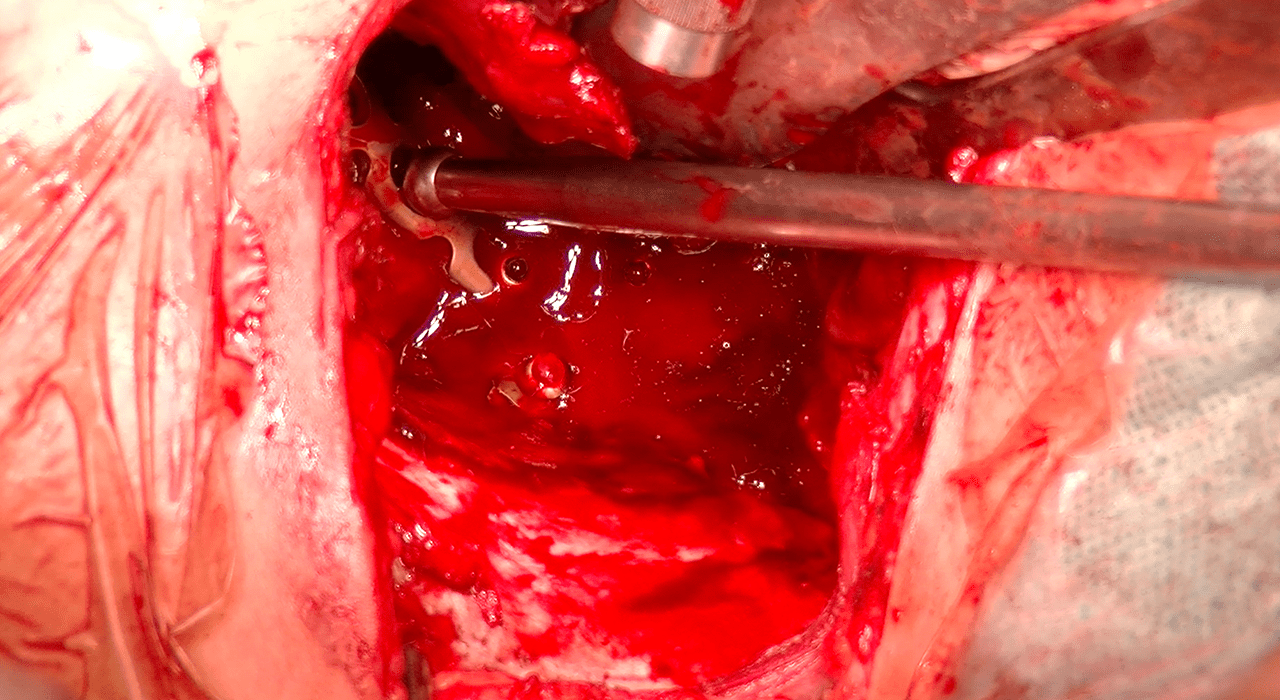
Improve your daily medical practice with this specialized training”
Syllabus
The structure of the syllabus has been designed by a team of professionals with knowledge of the implications of medical training in the approach to patients with osteoarticular pathology, who are aware of the relevance of the up-to-date specialization, and are committed to quality teaching using new educational technologies.

This Master's Degree in Update in Orthopedic Surgery and Traumatology, contains the most complete and up to-date-scientific program on the market”
Module 1. General Aspects
1.1. Evidence-Based Medicine For Choosing the Correct Treatment in Orthopedic Surgery and Traumatology.
1.2. Bone Bank
1.3. Update on Antibiotic Prophylaxis in Orthopedic Surgery and Traumatology
1.4. Thromboprophylaxis in Orthopedic Surgery and Traumatology
1.5. Update on Blood-Saving Policies Used
1.6. Applications of Cell Cultures in Orthopedics and Traumatology
1.7. Use of BMP in Orthopedics and Traumatology
1.8. Clinical Evidence on Platelet-rich Plasma in Tendon and Joint Pathology
1.9. Update in the Management of a Polytraumatized Patient
1.10. Biopsychosocial Model in Musculoskeletal Pathology
1.11. Update on Results Measurement in Orthopedic Surgery and Traumatology
1.12. Interventional Radiology in Musculoskeletal Pathology
1.13. Current Concepts of Neurophysiology in Orthopedic Surgery
Module 2. Foot and Ankle
2.1. Hallux Valgus and Hallux Rigidus
2.2. Deformities of the Little Toes and Metatarsalgia
2.3. Minimally Invasive Surgery (MIS) of the Forefoot
2.4. Update on Flat Foot in Adults
2.5. Update on Pes Cavus
2.6. Ankle Arthrodesis and Ankle Arthroplasty
2.7. Ankle Instability
2.8. Osteochondral Injuries
2.9. Tibial Pylon Fracture
2.10. Calcaneus and Talus Fractures and Dislocations
2.11. Fractures and Dislocations of the Midfoot and Forefoot
Module 3. Infections
3.1. Basis of Diagnosis of Periprosthetic Joint Infection and Osteosynthesis Material Infections
3.2. Current Status of the Treatment in Total Knee Replacements and Total Hip Replacements
3.3. Acute and Chronic Osteomyelitis
3.4. Septic Arthritis
3.5. Spondylodiscitis and Vertebral Infections
3.6. Antibiotic Management of a Patient With an Osteoarticular Infection
3.7. Skin Coverage Techniques
Mdule 4. Tumors of the Locomotor System
4.1. General aspects
4.2. Morphological Diagnosis of Tumors
4.3. Benign and Potentially Aggressive Tumors
4.4. Malignant Tumors of Bone and Cartilage Origin
4.5. Round Cell Lesions
4.6. Basics of Surgical Treatment of Locomotor System Tumors
4.7. Diagnostic and Therapeutic Approach to Locomotor Metastases
Module 5. Knee
5.1. Meniscal Pathology
5.1.1. Meniscal Suture
5.1.2. Meniscal Transplant
5.2. Ligament Pathology
5.2.1. Anterior Cruciate Ligament Surgery
5.2.2. LCP and CPL Surgery
5.2.3. New Perspectives in ACL Surgery
5.3. Patellofemoral Pathology
5.3.1. Previous Knee Pain
5.3.2. Patellar Instability
5.3.3. Femoropatellar Prostheses and Tibial Tubercle Osteotomies
5.4. Degenerative Pathology
5.4.1. Navigated Osteotomies in the Knee Region
5.4.2. Unicompartmental Femorotibial Prostheses
5.4.3. Bone Defects in Revision Surgery
5.4.4. New Perspectives in Knee Prothesis Surgery
Module 6. Pelvis, Hip and Femur
6.1. Traumatology
6.1.1. Fractures of the Pelvis and Acetabulum Open Reconstruction Techniques and Percutaneous Treatment of Pelvic Ring Fractures
6.1.2. Hip Fractures Current Criteria for Implant Selection Percutaneous Sliding Nail Plate in Pertrochanteric Fractures Implementation Techniques in Hip Fractures in Osteoporotic Patients
6.2. Orthopedics
6.2.1. Friction Torques in Total Hip Replacement Surgery Current Concepts and Criteria for Implant Selection
6.2.2. Total Hip Replacement Surgery with Short Stem and Overlay Prosthetics
6.2.3. Periprosthetic Fractures, Salvage Techniques
6.2.4. Minimally Invasive Approaches for Hip Arthroplasty
6.2.5. Total Hip Replacement in Developmental Dysplasia of the Hip
6.2.6. Painful Hip Prosthesis Diagnostic and Therapeutic Algorithm
6.2.7. Total Hip Replacement Surgery Replacement: Management of Cup and Femur Defects
6.2.8. Reconversion of Hip Arthrodesis to Arthroplasty
6.2.9. Femoroacetabular Impingement Syndrome Hip Arthroscopy
Module 7. Spinal Column
7.1. Herniation and Degeneration of the Cervical Disc Anterior and Posterior Cervical Microdiscectomy Anterior and Posterior Release-Arthrodesis Techniques
7.2. Degenerative Disc Disease Cervical and Lumbar Disc Prosthesis
7.3. Cervical Column Fractures Reconstruction and Osteosynthesis Techniques
7.4. Osteoporotic Fractures Vertebroplasty and Kyphoplasty
7.5. Lumbar Disc Hernia and Lumbar Spinal Stenosis Minimally Invasive and Endoscopic Release Techniques
7.6. Scoliosis Update in Surgical Techniques
7.7. Scheuermann Disease Indications and Correction Techniques
7.8. Alterations of the Sagittal Balance of the Spine Pedicular Subtraction Osteotomy, Smith Pedersen, Burgos y Ponte
7.9. Spondylolisthesis Current Concepts in Indications and Treatment
7.10. Update on the Management of Vertebral Tumors
7.11. Thoracolumbar Vertebral Fractures Reconstruction and Osteosynthesis Techniques
Module 8. Shoulder and Elbow
8.1. Traumatology
8.1.1. Fundamentals of Treatment of Scapula Fractures Conservation Treatment vs. Surgery Scientific Evidence
8.1.2. Fractures of the Proximal Extremity of the Humerus in 3 and 4 Fragments Surgical Reduction or Arthroplasty
8.2. Orthopedic Surgery of the Shoulder
8.2.1. Arthroscopic Stabilization of Recurrent Shoulder Dislocation
8.2.2. Shoulder Instability Diagnostic and Therapeutic Algorithm
8.2.3. Arthroscopic Release of the Subscapular Nerve
8.2.4. Bicipital Pathology and SLAP Tears
8.2.5. Critical Concepts in the Reparation of Rotator Cuff Tears Biology vs. Biomechanics
8.2.6. Massive Rotator Cuff Tears Indications and Limitations of Inverted Prosthesis
8.2.7. Glenohumeral Arthrosis
8.3. Orthopedic Surgery of the Elbow
8.3.1. Elbow Arthroscopy Indications and Limitations
8.3.2. Epicondylitis and Epitrochleitis New Surgical Techniques
Module 9. Hand and Forearm
9.1. Traumatology
9.1.1. Fractures of Phalanges and Metacarpals
9.1.2. Scaphoid and Carpal Bone Fractures
9.1.3. Fractures of the Distal End of the Radius
9.1.4. Traumatic Peripheral Nerve Pathology
9.1.5. Complex Hand Injuries: Catastrophic Hand
9.2. Orthopedic Surgery of the Hand
9.2.1. Wrist Arthrodesis and Partial Carpal Arthrodesis Carpectomy of the Proximal Carpal Row
9.2.2. Dupuytren's Disease, Rhizarthrosis, Surgical Techniques
9.2.3. Compressive Nervous Syndromes of the Upper Limbs
9.2.4. Wrist Arthroscopy
9.3. Tendon Surgery
9.3.1. Pathology of the Extensor Apparatus of the Fingers Boutonnière, Swan-Neck and Mallet Finger Deformities Reconstruction of Extensor Tendons
9.3.2. Tendon Transpositions Paralytic hand
Module 10. Child Orthopedics
10.1. Arthroscopic Techniques in Children
10.2. Musculoskeletal Tumors in Children
10.3. Clubfoot and Congenital Foot Pathology
10.4. Spondylolisthesis in Childhood
10.5. Surgery in Childhood Paralysis
10.6. Early Onset Scoliosis

A unique, key, and decisive training experience to boost your professional development”
Master's Degree in Orthopedic Surgery and Traumatology Update
It is to the Swiss physician Jean André Venel that we owe the implementation of orthopedics as a first-hand specialty, when in 1870 he founded the first clinic focused on treating anomalies in the locomotor system, especially bone deformities in children. Today, this branch of medicine and other related branches, such as traumatology, continue to be a great incentive to save lives while evolving at an impressive speed, given the new technological advances and scientific discoveries. Therefore, continuous training is required in this field, especially in its most practical issues, therefore, TECH offers the Master's Degree in Orthopedic Surgery and Traumatology Update, a compilation of ten thematic modules ranging from generalities such as interventional radiology in musculoskeletal pathology, to new surgical techniques to treat epicondylitis and epitrocleitis, among others. Through a solid and interactive 100% online learning we will turn you into a high profile expert to face the greatest medical-clinical challenges.
Stand out among the best orthopedists and traumatologists.
We have an experienced multidisciplinary team in the area of medicine that serves as teachers to transmit to students a methodical vision of the work, through the analysis of real cases in forums that can be accessed from any device that has internet. Do you want to know how to replace a worn or arthritic joint with a prosthesis using minimally invasive techniques, modern implants and blood recovery systems? Our program teaches you how to do it. It is well known that musculoskeletal injuries, the result of degenerative disorders developed in the context of occupational health, currently represent a notorious and recurring problem for a large part of the population, even becoming a cause of depression. The Master's Degree in TECH will give you enough theoretical and practical tools to address this challenge, so you will also be acquiring an added value of social commitment. We will also teach you about children's orthopedics, so elementary to treat incidents such as fractures, dislocations and similes, in addition to musculoskeletal tumors whose management can be complemented with various trauma procedures. Do not wait to surpass yourself, this is the most complete program on the market and only a click away.